Foundation Warning Signs in Ann Arbor Basements, Answered Briefly
A basement warning sign is easier to judge when you know what normally causes it. Below, every sign gets a quick explanation, a note on urgency and a link to the repair.
A sideways crack in block usually means soil pressure; water at the cove joint, groundwater; a sump running in dry weather, a high water table or a bad check valve; gray water from the floor drain, a sewer backup that the city asks residents to report.
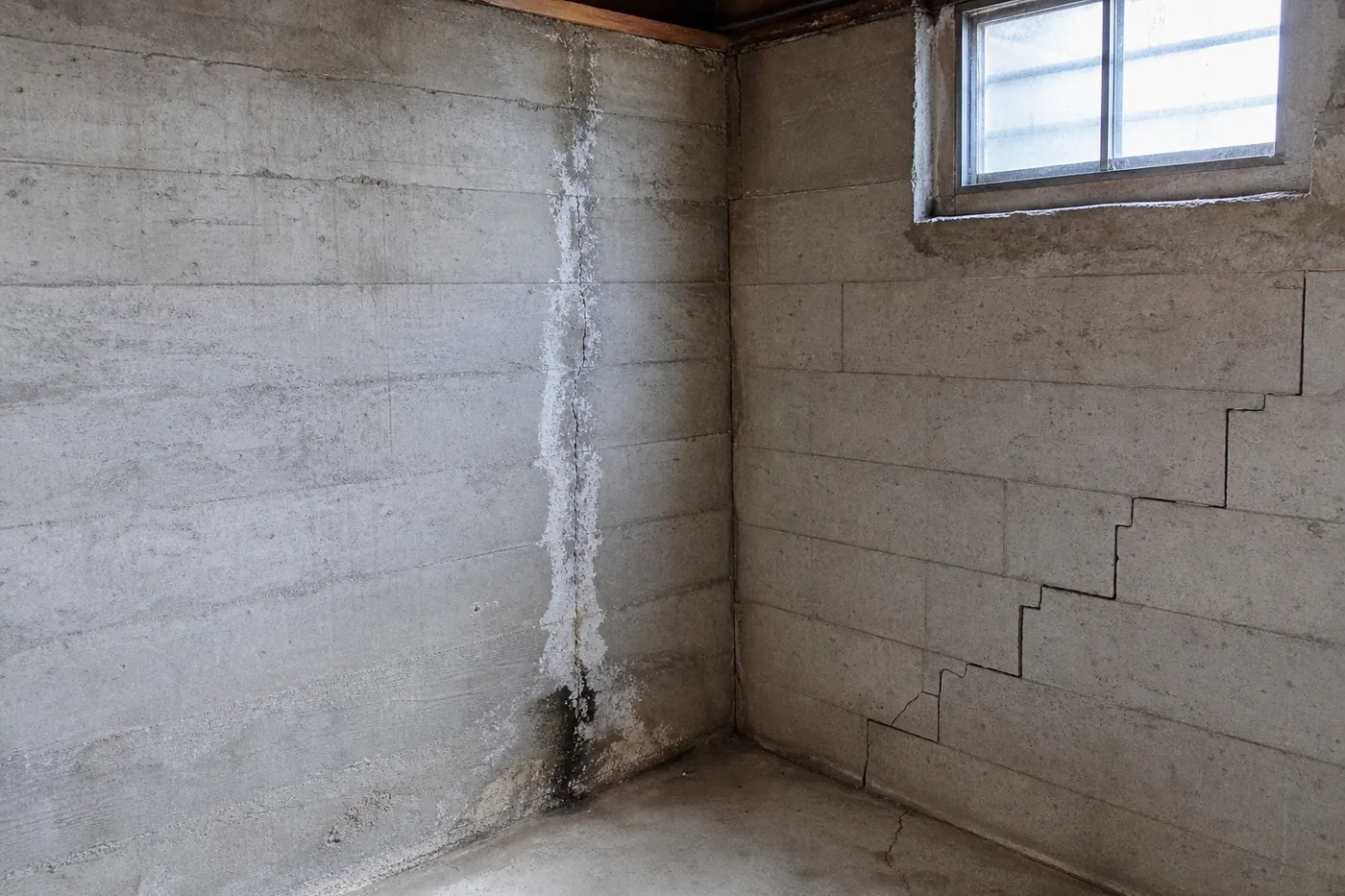
What does a horizontal crack in a block wall mean?
Wet, freezing soil is pushing the wall in. It is the crack to take most seriously. Run a taut string along the wall, note the gap at its widest, and pencil a date at each end of the crack; if it grows, see basement wall cracks soon.
Is a vertical crack in a poured wall a problem?
Usually not for the structure; poured walls crack as they cure. It matters if it leaks after rain or if one side sits proud of the other. A leaking crack can be injected for $200 to $1,000 (Fixr, 2026).
Why does water seep in where the wall meets the floor?
Groundwater is building up outside and finding the cove joint. On slow-draining till that happens after heavy rain and spring melt. Start with gutters and the slope of the yard; if it keeps happening, see basement waterproofing.
Why does my sump pump run when it has not rained?
A high water table, a check valve that lets discharged water fall back into the pit, or a float set too low. Have it checked before it wears the pump out; see sump pumps and footing drains.
Gray water rose out of the floor drain. Is the foundation leaking?
No. The city describes gray, odorous water from a floor drain as a sanitary sewer backup and asks residents to report it. It is a plumbing and sewer question, not a wall leak.
What do stair-step cracks near a corner mean?
The corner is likely settling, perhaps over fill or soft ground, or where a downspout soaks the soil. Date the crack ends and watch through a season; growing cracks or sticking doors nearby mean piers may be needed.
Why is the front stoop pulling away from the house?
Stoops and porches often sit on shallower footings than the house, so frost and settling move them separately. Seal the gap so water cannot run down to the basement wall, then decide whether to lift or rebuild the stoop.
What is the white powder on my basement wall?
Efflorescence, minerals left as water moves through concrete or block and evaporates. It is not damage itself, but it shows where water is getting through. Brush it off and see where it returns.
Tell the specialist what the basement is doing
A wall crack that is getting longer, water along the floor after a thaw, a sump that runs all the time: a couple of sentences will do. Your note goes to one independent foundation and waterproofing specialist who works around Ann Arbor.