Sump Pumps and Footing Drains in Ann Arbor Basements
Sump pumps in Ann Arbor carry a piece of city history. Footing drains around many older foundations were once tied straight into the sanitary sewer, and in big storms sewage came back up into basements. Disconnecting those drains means groundwater goes to a sump pump instead, and that pump is now the homeowner's to keep running.
Fixr (2025) prices a sump pump at $800 to $2,000 installed, $350 to $1,000 to replace and $150 to $250 to add a battery backup. The City of Ann Arbor does not maintain or warrant sump pumps or footing drain disconnections and strongly recommends a backup system.
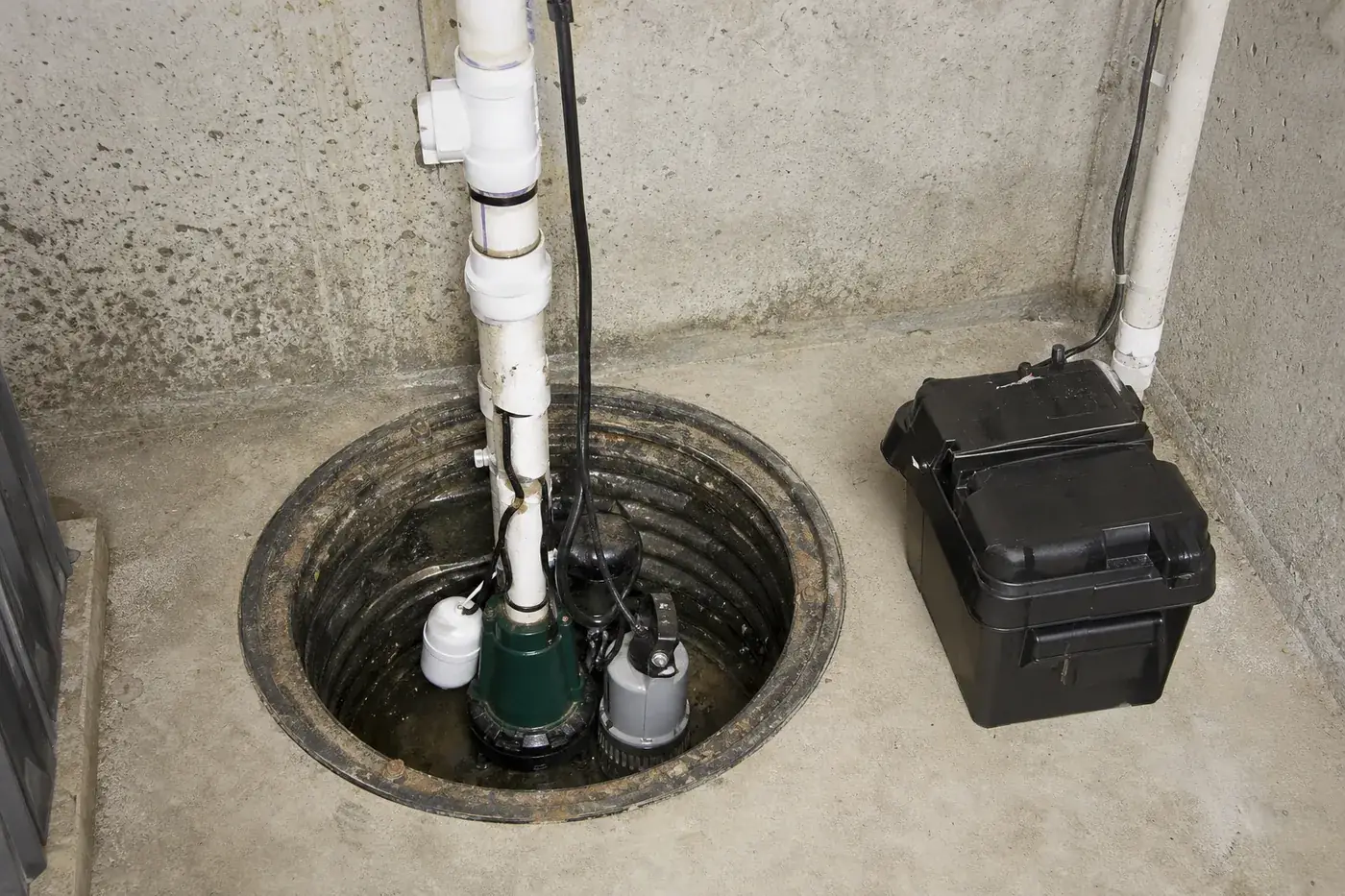
Why do so many Ann Arbor basements have sump pumps?
The city explains that footing drains, pipes around or under a house that collect water, were connected directly to the sanitary sewer, so storm water mixed with sewage. During large storms in the 1980s, 1990s and early 2000s, sewage backed up into homes. Separating the footing drain from the sewer and sending the water to a sump is the fix, and under the city's current developer offset program owners negotiate the work directly with a developer and contractor, at no or reduced cost to them.
Who maintains the sump after a footing drain disconnection?
The property owner. The city says it does not maintain or warrant sump pumps or disconnections, unless a warranty was negotiated with the developer or contractor. It strongly recommends a backup and publishes checklists on maintenance, backup options and common causes of failure. Plumbers can do semi-annual maintenance, and the city's page says most plumbers and some handyman services can replace or repair a pump.
Sump pump backup choices
- Battery backup: a second pump that runs when the power or the main pump fails; Fixr (2025): $150 to $250 to add to an existing pump.
- Water-powered backup: uses city water pressure, no battery. The city requires its backflow prevention device to be tested by a licensed certified plumber and inspected by the city every three years.
- A second primary pump: for pits that fill fast after storms or snowmelt.
Installation and replacement
A new sump means cutting the basement floor, digging a pit and running a discharge line; Fixr (2025) lists $500 to $1,200 to dig the pit and $250 to $2,000 to bury the discharge pipe. Replacing a worn pump is far simpler at $350 to $1,000. Ask where the water will go: it should leave well away from the foundation, never into a floor drain. Michigan's seller disclosure form lists the sump pump among the systems a seller reports on. Compare totals on the Ann Arbor foundation repair cost page.
Questions homeowners ask
How often should I test my sump pump?
At least twice a year, and before spring melt. Pour water into the pit until the float lifts, the pump starts and the level drops, then check the outlet outside. Test a battery backup with the main pump unplugged.
Tell the specialist what the basement is doing
A wall crack that is getting longer, water along the floor after a thaw, a sump that runs all the time: a couple of sentences will do. Your note goes to one independent foundation and waterproofing specialist who works around Ann Arbor.