Till, Outwash Sand and Muck: The Ground Under Ann Arbor Basements
The ground under Ann Arbor was laid down by glaciers and their meltwater, and it changes from one block to the next. Knowing which kind of soil a house sits on explains a great deal about its basement.
USDA's soil survey of Washtenaw County maps loamy till (Wawasee, 12%), sandy outwash (Boyer, Fox and Spinks), clay-rich till and about 5% deep muck (Houghton). About 46% of the county's soil components rate moderate or high for shrink-swell.
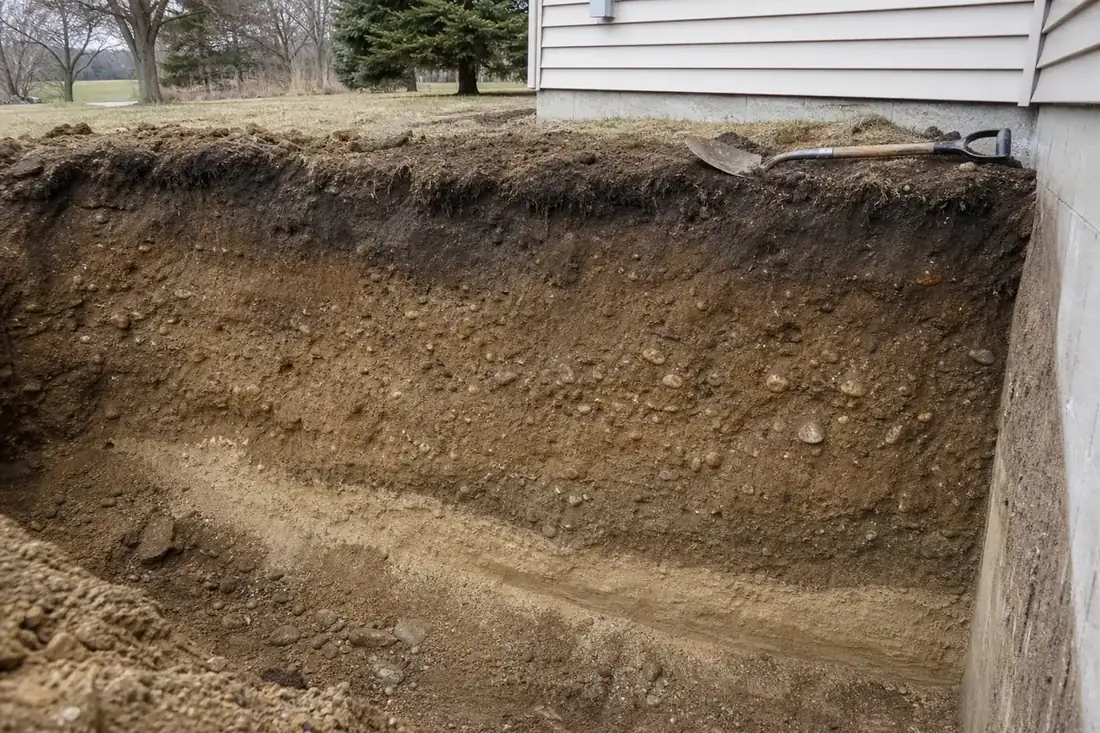
Glacial till
Till is the unsorted mix a glacier leaves behind. Wawasee soils, the most extensive in the county, formed in till on moraines and till plains and are well drained. Others formed over dense till that water moves through slowly: Glynwood and Morley are moderately well drained, Blount and Conover somewhat poorly drained. On those, water perches against a basement wall after rain and snowmelt, which is where most waterproofing calls begin.
Outwash sand and gravel
Meltwater sorted some of that debris into sand and gravel. Boyer, Fox and Spinks soils, about 21% of the county's major components together, are well drained, and Boyer and Spinks rate low for shrink-swell; Fox, for example, overlies stratified sandy outwash on outwash plains and terraces. Basements on outwash often stay dry, though a high water table near rivers can still reach them.
Muck in the low spots
Houghton muck, about 5% of the county, is very deep organic soil in depressions and drainageways, very poorly drained. Organic soil compresses under load, so a house or addition built on filled low ground can settle unevenly, showing up as stair-step cracks and sloping floors. If you know your lot was a wet spot once, tell the specialist.
Clay that swells, and frost
USDA rates about 40% of the county's major soil components moderate for shrink-swell and 6% high, mostly the clay-rich tills such as St. Clair. Those soils swell when wet, shrink when dry and, near the top of a wall, freeze; Michigan's code puts footings 42 inches down for that reason. Pressure on a block wall from that soil is covered on the basement wall page.
Tell the specialist what the basement is doing
A wall crack that is getting longer, water along the floor after a thaw, a sump that runs all the time: a couple of sentences will do. Your note goes to one independent foundation and waterproofing specialist who works around Ann Arbor.